Published 6 min read
What makes a good business website?
A good business website isn't the one with the most effects. It's the one that tells the right people what you do, proves you're worth contacting and makes the next step easy.

Ask ten business owners what makes a good website and you’ll hear about colours, animations and whether it “looks modern”. Those things matter a little. But customers don’t visit your website to admire it. They visit to answer a few practical questions: Do they do what I need? Can I trust them? How do I get in touch?
A good business website answers those questions quickly, on any device, for the people you actually want as customers. Here’s what that looks like in practice.
In short: a good business website has one clear job, explains what you do in plain language, shows real proof, loads quickly on a phone, makes contacting you effortless, is structured so Google understands it, stays accurate, and belongs to you.
1. It has one clear job
Before anyone designs a page, you should be able to finish this sentence: “Our website’s main job is to get people to…”
For a tradie, it might be requesting a quote. For a clinic, booking an appointment. For an online store, buying. For a professional service, booking a call.
Once the job is clear, every page can point towards it. Without it, websites drift into a collection of pages that say nice things but don’t lead anywhere.
2. It says what you do, for whom, and where
Within a few seconds of landing on your home page, a visitor should know:
- What you do
- Who you do it for
- Where you work, if location matters
- What to do next
“Quality solutions for all your needs” tells a visitor nothing. “Commercial and residential electrician in Bendigo, available for same-week jobs” tells them almost everything. Specific beats clever.
The same applies to each service. A single “Services” page with a bullet list forces customers to guess. A page per main service lets you explain what’s included, who it suits, what it costs or how pricing works, and answer common questions. It also gives Google a clear page to show for each kind of search.
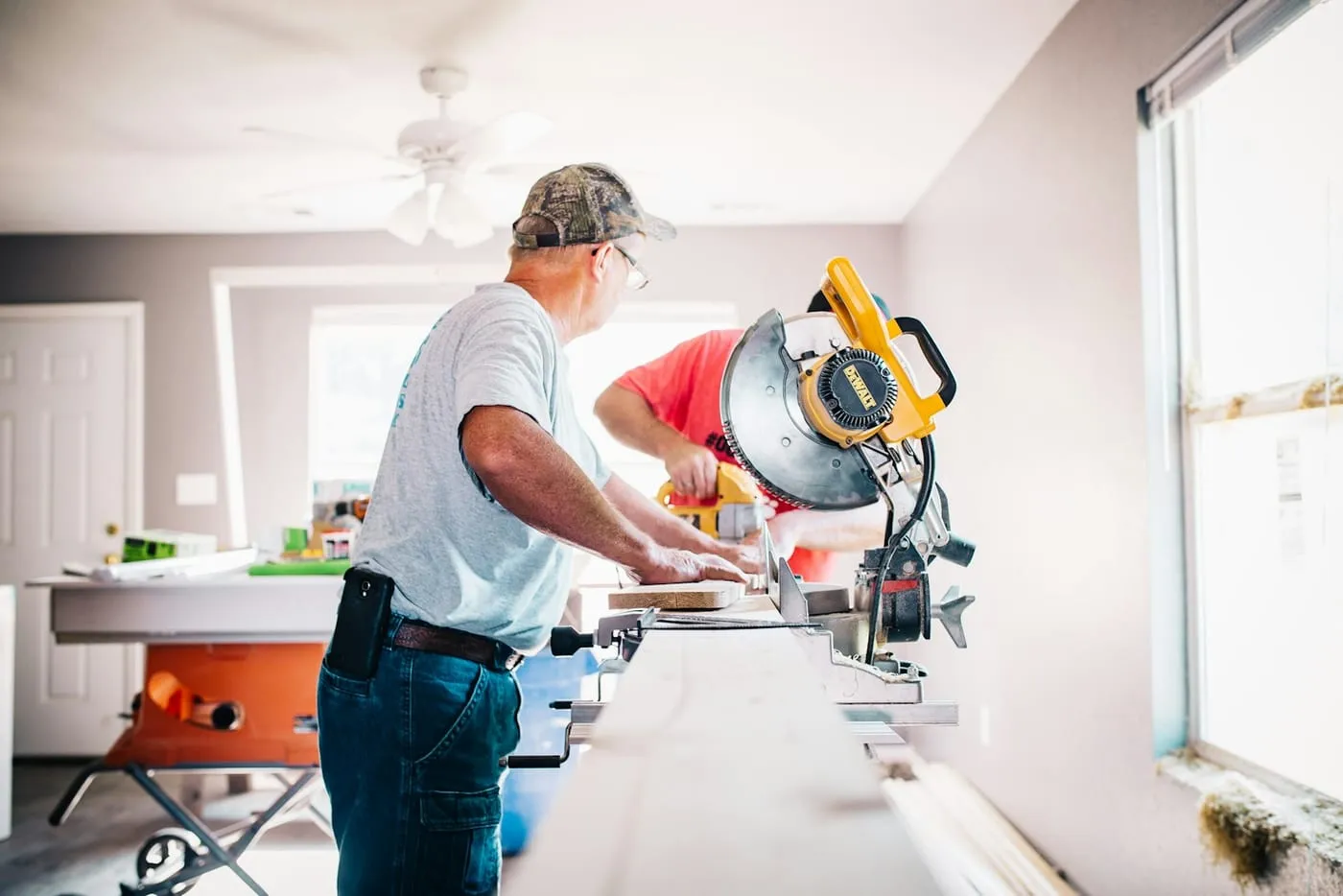 Photos of your real work do more than any stock image.
3. It shows real proof
Anyone can write “trusted, professional, experienced”. Good websites show it instead:
- Photos of your actual work, team and premises
- Reviews and testimonials from real, named customers
- Examples or case studies of past projects
- Licences, memberships and qualifications you genuinely hold
Real proof is often the difference between a visitor contacting you and going back to the search results. We cover this in more depth in why websites build trust.
 Many visitors will see your site on a phone first.
4. It works properly on a phone
Many of your visitors will arrive on a phone, often in a hurry. A good website is designed for that from the start, not squeezed down afterwards:
- Text is readable without zooming
- Buttons are big enough to tap
- Contact details and enquiry forms are easy to reach from every page
- Pages load quickly on a mobile connection
Test your own site on your phone, on mobile data rather than Wi-Fi. If anything is fiddly for you, it’s fiddly for your customers.
5. It’s fast
Slow pages lose people. Speed comes down to a handful of practical choices: properly sized and compressed images, not loading heavy scripts and plugins you don’t need, and good hosting.
You can check any page for free at PageSpeed Insights. It isn’t the only measure that matters, but a poor mobile result is worth taking seriously.
6. Getting in touch is effortless
This is where many websites quietly lose enquiries. A good website:
- Has a clear call to action on every page, worded around what the customer wants (“Get a quote”, “Book a time”)
- Keeps forms short, asking only what you need to respond well
- Tells people what happens after they enquire and roughly when they’ll hear back
- Makes sure form submissions actually reach someone who replies
That last point sounds obvious, but test it. Forms that send to an old email address, or land in spam, are more common than you’d think.
7. Google can understand it
A good website gives search engines the same clarity it gives people:
- Each page has a unique title and description that says what it’s about
- Headings describe the content beneath them
- Services and locations have their own pages, rather than being crammed into one
- The site is fast, secure (HTTPS) and works on mobile
- Your business name and details match your Google Business Profile and other listings
None of this guarantees rankings, but it removes the obstacles. For local businesses, the website works hand in hand with your Google Business Profile; our local SEO page explains how the two fit together.
8. It stays accurate and belongs to you
Old prices, past staff, discontinued services or opening hours from two years ago all chip away at trust. A good website is easy to keep up to date, whether you edit it yourself or someone manages it for you.
It’s also worth knowing who owns what. Your domain name should be registered in your business’s name. Depending on how your site is built and hosted, the website itself may be owned by you or provided as part of a hosting arrangement. Either can be fine; just make sure you understand which one you have before you sign up.
What a good website doesn’t need
It’s just as useful to know what you can skip:
- Sliders and carousels on the home page. Most visitors never see past the first slide.
- Autoplay video with sound. It annoys more people than it impresses.
- Pages for the sake of pages. Ten thin pages are worse than four useful ones.
- Jargon. Write the way you’d explain it to a customer on the phone.
A quick check for your own website
Open your website on your phone and ask:
- Can I tell what this business does, and where, within five seconds?
- Is there a page for each main service?
- Are there real photos and genuine reviews?
- Is the next step obvious on every page?
- Does it load quickly on mobile data?
- Is everything on it still accurate?
If you answered no to two or more, your website is probably costing you enquiries. Our guide on how to tell if your website needs a redesign will help you decide whether to fix it or start again.
How we build websites
Every website we build starts with its job and the questions your customers ask, then works outwards to structure, copy and design. If you’d like a second opinion on your current site, book a free consultation. You can also read about our website design service, see recent projects, or check what a website costs in Australia.
We build websites for businesses in Bendigo, Albury, Wodonga, Shepparton, Wangaratta and Benalla, and for businesses right across Australia. If you sell online, see our e-commerce website design page, and if your logo needs work too, see branding.
Questions about this topic
How many pages does a business website need?
Enough to answer your customers' questions, and no more. Most service businesses need a home page, a page for each main service, an about page, a page showing their work and a contact page. A business with one simple service may need fewer.
Is a good-looking website the same as a good website?
No. Design matters because it shapes first impressions, but a beautiful site that's slow, unclear or hard to contact you through won't win much work. Looks support the job; they aren't the job.
Can I build a good website myself?
Yes, if you have the time and focus on the basics in this guide. DIY builders have improved a lot. Where businesses usually struggle is clear copywriting, structure for search and keeping the site fast and up to date.